US Tariff Threat: Textile, Jewellery and Seafood Exporters Most at Risk, Say Analysts
A US proposal for tariffs of up to 25% on Indian goods, or 17% with a trade deal, puts exporters such as Gokaldas Exports and Welspun Living in focus. Geojit's V K Vijayakumar sees little near-term market impact and calls it a pressure tactic.
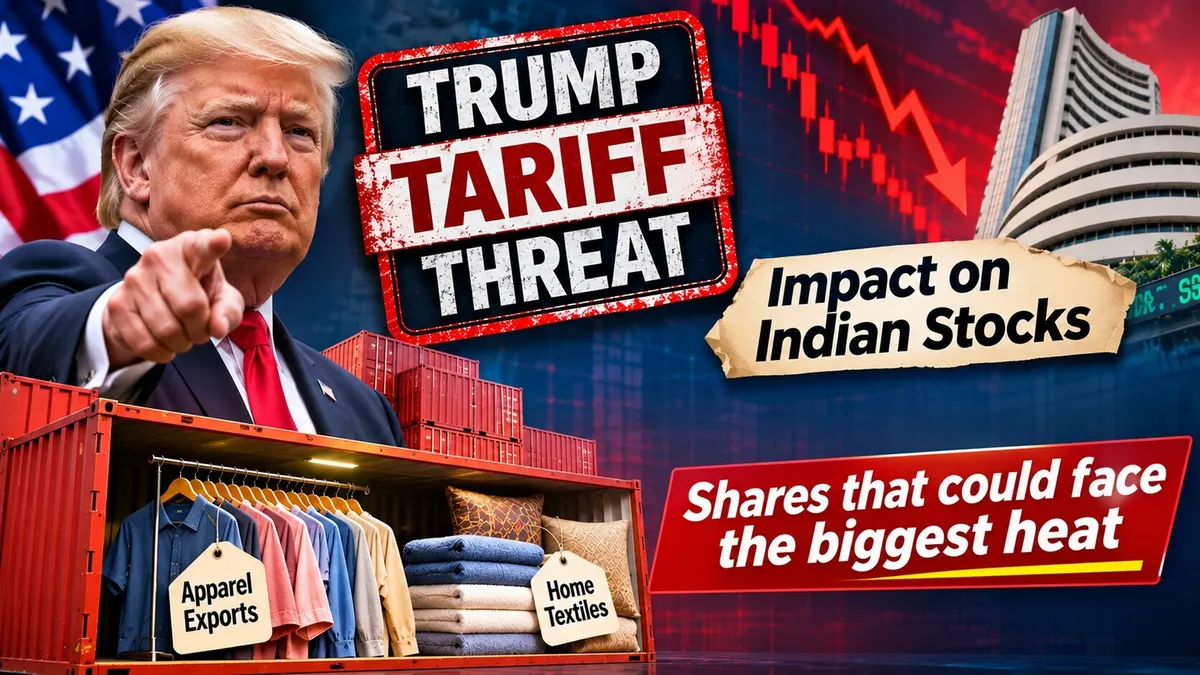
Photo: LiveMint
What happened
The US on Wednesday set out a new tariff proposal that could put duties of up to 25% on Indian goods. The rate comes from Section 301 investigations into excess production capacity that Washington says hurts American interests. If India and the US sign a reciprocal trade agreement, the proposed rate on Indian exports drops to 17%.
The office of the US Trade Representative has also proposed rates of 18% for Bangladesh, Cambodia and Thailand and 20% for China and Vietnam, again tied to those countries striking trade deals with Washington. On those terms, Indian exporters would pay a lower rate than rivals in these competing economies if New Delhi signs an agreement.
The move follows a deal announced in February, when US President Donald Trump said New Delhi had agreed to buy significantly more American goods and Washington lowered tariffs on Indian exports to 18% from 50%. Exporters such as Gokaldas Exports and Welspun Living are among the stocks seen facing the most pressure if the higher rate is applied.
Key numbers
- Proposed US tariff on India: up to 25% without a deal; 17% with a reciprocal trade agreement
- Proposed rates for rivals with deals: 18% for Bangladesh, Cambodia and Thailand; 20% for China and Vietnam
- Tariff on Indian exports agreed in February: 18%, down from 50%
- Sectors flagged as vulnerable: marine products, engineering goods, textiles, gems and jewellery, seafood, chemicals and solar equipment
Why it matters for Indian investors
For the broader market, analysts are not alarmed. Geojit Investments' chief investment strategist V K Vijayakumar said the threat is unlikely to affect Indian stocks in the near term, describing it as a tactic to push India towards a deal, and added: 'India is unlikely to relent much.' Vinit Bolinjkar, head of research at Ventura, was more cautious, saying the proposal could bring short-term volatility, hurt export competitiveness and weigh on corporate earnings.
The pain would fall mainly on companies that ship goods to the US. Bolinjkar named marine products, engineering goods, textiles, and gems and jewellery as the sectors most at risk of thinner margins and slower orders, while Seema Srivastava, senior research analyst at SMC Global Securities, also flagged seafood, chemicals and solar equipment. Bolinjkar sees banking, power, telecom and capital goods, which rely mainly on the domestic economy, holding up better, and regards firms with diversified markets, pricing power and strong balance sheets as better placed.
What to watch
The trade talks are the main trigger. Bolinjkar said a successful India-US agreement that brings the rate down to 17% could be a meaningful positive for market sentiment, and at that level Indian exporters would face a lower duty than competitors in Bangladesh, Cambodia, Thailand, China and Vietnam under the proposed deal rates. Without a deal, the 25% figure stays in play.
For exporters such as Gokaldas Exports and Welspun Living, investors will watch management commentary on US orders, pricing and margins, and any sign that American buyers are shifting sourcing between countries while the proposal is debated. Export-heavy stocks may stay sensitive to headlines on the negotiations.
Questions readers ask
What tariff has the US proposed on Indian goods?
Up to 25% under Section 301 investigations into excess production capacity. The rate would fall to 17% if India reaches a reciprocal trade agreement with the US.
Which sectors could be hit hardest?
Analysts flagged exporters of marine products and seafood, textiles, gems and jewellery, engineering goods, chemicals and solar equipment.
Source: LiveMint report(opens in a new tab), published .
This story was written in our own words by the Finduniya News Desk from the facts in that report, with the help of an AI writing tool. The wording is ours; the original reporting belongs to the publisher.