India 10-Year Bond Yield Falls 6 Basis Points to 7.25% as Crude Drops 20% From Peak
India's 10-year benchmark bond yield closed at 7.25%, down six basis points from 7.31%, as crude oil's 20%-plus fall from October peaks reduced inflation concerns and short-covering boosted bond prices.
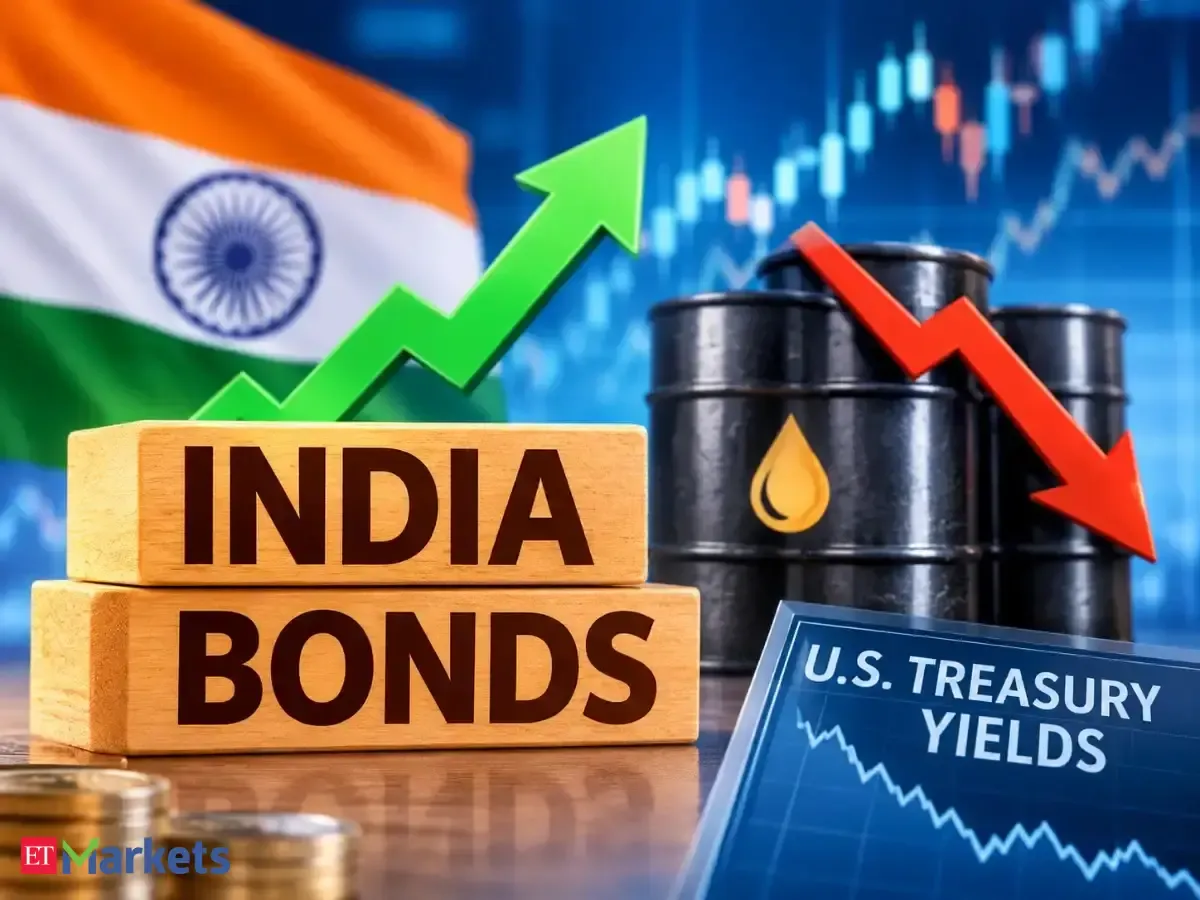
Photo: Economic Times
What happened
India's government bond market extended its recent gains, with the 10-year benchmark yield closing at 7.25%, a fall of six basis points from its previous close of 7.31%, according to CCIL data. The 2036 benchmark bond yield also eased, settling at 7.2393%. The rally was partly driven by short-covering as traders who had earlier sold bonds unwound their positions.
The main tailwind for bonds is a sharp decline in crude oil prices. Oil has fallen more than 20% from its October peaks, which reduces India's import bill, eases headline inflation pressure, and improves the outlook for the government's finances. Lower inflation expectations typically push bond yields down as investors become less concerned about rate rises.
Key numbers
- 10-year benchmark bond yield: 7.25% (down 6 basis points from 7.31%)
- 2036 benchmark bond yield: 7.2393%
- Crude oil: down more than 20% from October 2026 peaks
Why it matters for Indian investors
Falling bond yields have broad implications for the Indian economy. For bond investors, rising prices (falling yields) produce mark-to-market gains on existing holdings. Banks and insurance companies that hold large government securities portfolios benefit from higher bond valuations. A sustained easing in yields can eventually lead to lower lending rates for companies and households.
For the government, lower yields reduce the cost of new borrowings, which can help contain the fiscal deficit. For the broader equity market, a benign bond yield environment reduces the discount rate applied to company earnings, supporting higher equity valuations.
What to watch
The Reserve Bank of India's next policy meeting will be a key signal for the direction of yields. If inflation remains contained and crude prices stay subdued, there is market speculation about a rate cut. Any reversal in oil prices or a surprise in inflation data would put upward pressure on yields again.
Source: Economic Times report(opens in a new tab), published .
This story was written in our own words by the Finduniya News Desk from the facts in that report, with the help of an AI writing tool. The wording is ours; the original reporting belongs to the publisher.